
OphthalmoClub
Surgical Simulation in Ophthalmology
Why Surgical Simulation Matters in Ophthalmology

~10 minute read
Summary
- Understanding a procedure and performing it are two different skills.
- Microsurgical expertise develops gradually — through repeated, guided performance, not study alone.
- Deliberate practice and timely feedback are what turn repetition into improvement.
- Every surgeon moves along a learning curve; structured learning helps navigate it.
- Simulation matters because of how it organises practice — not the technology itself.
In this article
- Introduction
- Microsurgical Skill Development is Different
- Simulation is an Educational Strategy, Not a Technology
- How Microsurgical Skills Develop
- Why Simulation Supports Learning
- Understanding Learning Curves in Ophthalmic Surgery
- Assessment and Competency Development
- Simulation Modalities in Ophthalmology
- Conclusion
- Key Take-Home Messages
Introduction
Ophthalmic surgery is among the most technically demanding areas of medicine. Surgeons operate within a confined anatomical space, often under high magnification, using instruments measured in millimeters. Success depends not only on medical knowledge, but also on the ability to perform highly precise movements while interpreting complex visual information in real time.
Yet understanding a procedure and performing it successfully are fundamentally different experiences. A surgeon may understand every step of a pars plana vitrectomy or cataract procedure, yet still require substantial practice before being able to execute those steps efficiently, safely, and consistently.
Developing microsurgical skills is therefore a gradual process. Hand–eye coordination, depth perception, instrument control, tissue handling, and procedural judgment are not acquired through theoretical study alone. Rather, they develop through repeated performance, guided refinement, and progressive experience.
As ophthalmic surgical education continues to evolve, increasing attention has been directed toward simulation-based learning. Discussions about simulation, however, often focus on equipment, virtual reality platforms, or technological innovation. While these technologies may be valuable, they can obscure a more fundamental educational question:
Why does simulation actually support learning?
The answer lies not in technology itself, but in the way simulation creates opportunities for structured practice, feedback, reflection, assessment, and progressive skill development. Understanding these educational principles is essential for appreciating the role of simulation within contemporary ophthalmic surgery.
Microsurgical Skill Development is Different
Learning ophthalmic surgery involves far more than memorizing procedural steps.
Surgeons must gradually develop:
- Hand–eye coordination
- Depth perception under magnification
- Fine instrument control
- Bimanual dexterity
- Spatial orientation
- Tissue handling skills
- Procedural judgment
These abilities cannot be acquired through theoretical study alone.
Educational research consistently shows that technical expertise develops through repeated performance, guided refinement, and progressive challenge. In other words, expertise is built through experience that is intentionally structured for learning.
This concept is particularly important in microsurgery, where even small movements can produce significant effects on delicate ocular tissues.
Simulation is an Educational Strategy, Not a Technology
When people hear the term “simulation,” they often think of sophisticated virtual reality systems. In reality, simulation encompasses a much broader range of educational approaches.
Simulation may involve:
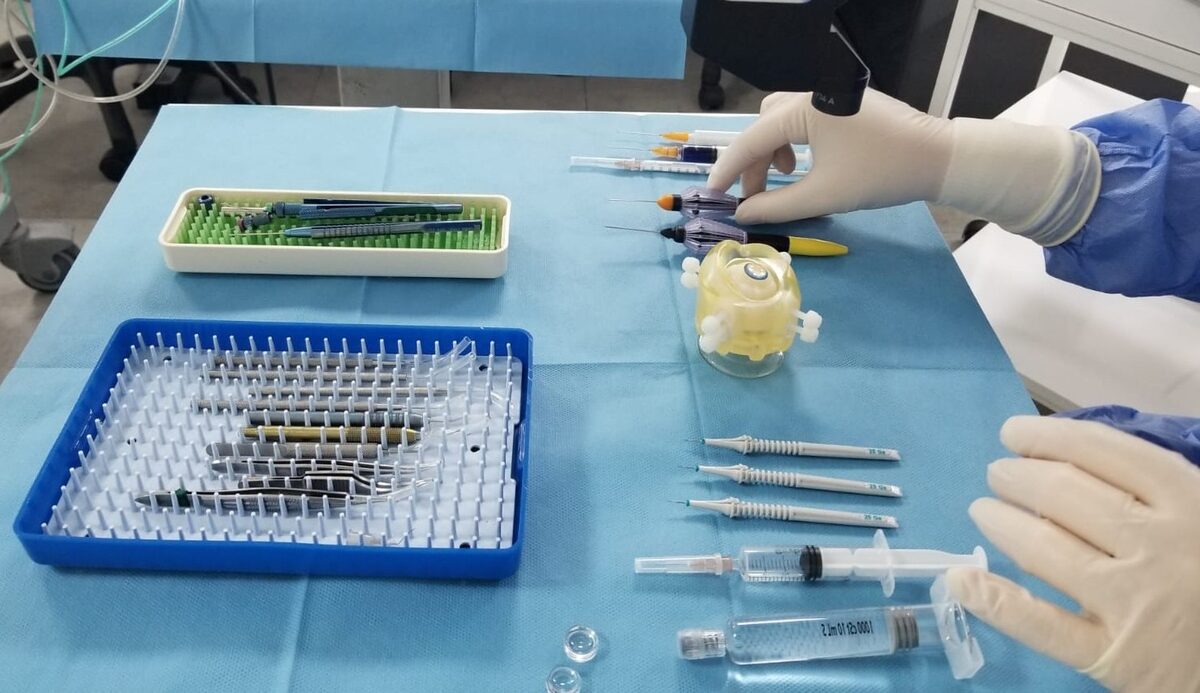
- Dry-lab exercises
- Wet-lab environments
- Ex vivo ocular tissue
- Artificial eye models
- Bench-based microsurgical tasks
- Virtual reality platforms
Although these methods differ considerably, they share a common purpose: creating opportunities for practice outside direct patient care.
From an educational perspective, simulation is best understood as a learning strategy rather than a specific technology.
This distinction is important. Educational outcomes are not determined solely by the sophistication of the equipment being used. A highly advanced simulator does not automatically produce effective learning, just as a simple practice model is not inherently limited.
What ultimately matters is how the learning experience is designed.
A simulation activity that incorporates clear objectives, focused practice, meaningful feedback, reflection, and progressive challenge may support learning effectively regardless of the specific technology involved. Conversely, even the most advanced simulation technology may have limited value if these principles are absent.
Viewed in this way, simulation is not defined by the equipment itself, but by its ability to create structured opportunities for skill development. The value of simulation lies not in what learners practice on, but in how the practice experience is organized to support learning.
Understanding simulation as an educational strategy rather than a technology helps shift attention from the tools being used to the learning processes they are intended to support.
How Microsurgical Skills Develop
Microsurgical skills are not acquired all at once. They emerge through a combination of well-established learning processes, each of which shapes how technique becomes more precise and reliable over time. The principles below help explain how that development unfolds.
Deliberate Practice
One of the most influential concepts in educational science is deliberate practice.
Deliberate practice differs from simple repetition. Performing the same task repeatedly does not automatically lead to improvement.
Instead, deliberate practice involves:
- Clearly defined goals
- Focused repetition
- Immediate feedback
- Error correction
- Progressive challenge
A learner performing a surgical maneuver ten times without feedback may simply reinforce ineffective habits. In contrast, a learner who receives targeted guidance after each attempt is more likely to improve.
This distinction is central to understanding why structured practice environments matter.
Motor Learning
Microsurgical performance relies heavily on motor learning—the process through which movement skills are acquired and refined over time.
In ophthalmic surgery, many technical abilities depend on the gradual development of precise motor patterns. Tasks such as maintaining stable instrument control under high magnification, performing a continuous curvilinear capsulorhexis, elevating the posterior hyaloid, or manipulating delicate retinal tissue require skills that cannot be acquired through observation alone.
Research shows that complex technical skills develop gradually through repeated practice sessions. Improvements occur not only during practice itself but also between sessions as newly acquired motor patterns become consolidated.
This is one reason why repeated exposure over time is generally more effective than a single intensive experience. Skill development depends not only on the amount of practice performed, but also on opportunities for repeated performance, refinement, and consolidation.
Understanding motor learning helps explain why microsurgical expertise develops progressively and why learners often experience measurable improvement even when progress is not immediately apparent during individual practice sessions.
Experiential Learning
Educational theory also highlights the importance of experience-based learning.
Learning does not occur simply because a task is performed. It occurs when learners:
- Perform a task
- Reflect on the experience
- Identify strengths and weaknesses
- Apply new insights during subsequent attempts
For example, a surgeon performing a simulated fluid–air exchange or practicing membrane peeling may recognize that a particular step consistently creates difficulty. Reflection on that experience allows the learner to identify contributing factors, adjust technique, and apply those insights during future attempts.
This cycle of action, reflection, and refinement plays a crucial role in surgical skill development. Experience alone does not necessarily lead to improvement. Rather, learning occurs when experience is accompanied by thoughtful analysis and deliberate modification of future performance.
In this way, experiential learning helps transform practice into progressive skill development.
Feedback
Feedback represents one of the most powerful influences on learning.
Effective feedback helps learners:
- Recognize performance gaps
- Identify specific areas for improvement
- Reinforce successful behaviors
- Develop self-assessment skills
In ophthalmic microsurgery, feedback may focus on details such as microscope positioning, instrument control, tissue handling, foot pedal use, procedural flow, or the execution of specific surgical maneuvers. These observations help learners identify aspects of performance that may not be apparent through self-observation alone.
In microsurgery, where subtle technical details can influence outcomes, feedback becomes particularly important during the early stages of learning. Timely and specific feedback allows learners to refine technique, avoid reinforcing ineffective habits, and develop more accurate self-assessment over time.
As experience increases, feedback also helps learners progress from basic technical execution toward greater efficiency, consistency, and procedural judgment.
Why Simulation Supports Learning
Simulation aligns closely with these established principles of skill acquisition.
Repetition Without Patient Risk
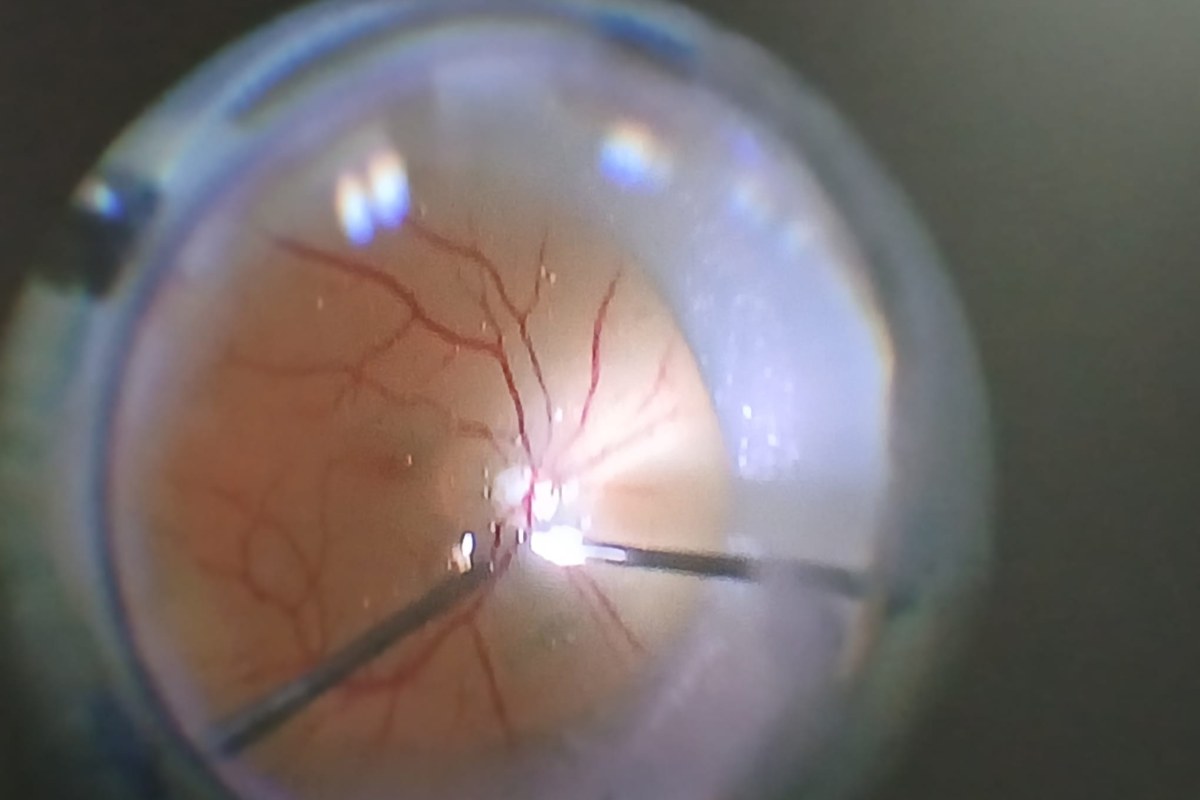
Many microsurgical skills require extensive repetition before they become reliable and efficient. Clinical procedures, however, are performed primarily for patient care rather than educational repetition. Simulation provides opportunities to repeat specific technical tasks multiple times under controlled conditions without exposing patients to unnecessary risk.
Structured Practice
Complex procedures can be divided into smaller components that are practiced individually before being integrated into complete surgical workflows.
For example, learners may focus on:
- Microscope orientation
- Instrument navigation
- Suturing techniques
- Tissue manipulation
- Specific procedural steps
This approach allows learners to master individual elements before managing the complexity of an entire operation.
Progressive Complexity
Educational research suggests that learning is most effective when challenges increase gradually. Simulation environments can be adapted to the learner's developmental stage. Novices may begin with basic psychomotor exercises, while more experienced surgeons may focus on advanced procedures, complication management, or efficiency.
Reflection
Simulation creates opportunities for learners to step back and analyze performance. Questions such as What worked well? What was difficult? Why did an error occur? What should be changed next time? are often easier to explore in educational settings than during busy clinical workflows.
Assessment
Simulation also creates opportunities for objective observation and assessment. Performance can be evaluated using structured frameworks, checklists, rating scales, and procedure-specific assessment tools. This allows progression to be demonstrated rather than assumed.
Understanding Learning Curves in Ophthalmic Surgery
Every surgeon experiences a learning curve.
The acquisition of competence is rarely immediate and almost never linear. Early stages of learning are often characterized by:
- Higher cognitive workload
- Greater performance variability
- Increased technical errors
- Slower procedural execution
For example, a trainee performing a cataract procedure or a pars plana vitrectomy for the first time may devote considerable mental effort to instrument positioning, microscope control, spatial orientation, and procedural sequencing. Tasks that later become routine often require substantial concentration during the early stages of learning.
As experience accumulates, performance becomes more efficient and consistent. Cognitive resources that were initially devoted to basic technical execution can gradually be redirected toward higher-level decision-making, situational awareness, and management of unexpected events.
Studies in ophthalmology have demonstrated learning curves across multiple procedures, including cataract surgery and vitreoretinal surgery. Importantly, these curves reflect more than procedural exposure alone.
Progress is influenced by:
- Quality of supervision
- Feedback
- Educational design
- Opportunities for deliberate practice
- Structured assessment
Understanding learning curves helps explain why modern surgical education increasingly emphasizes preparation before independent clinical performance. The goal is not to eliminate learning curves—which are a natural feature of skill acquisition—but to support learners as they progress through them in a structured and efficient manner.
Assessment and Competency Development
Contemporary medical education has shifted from time-based models toward competency-based approaches.
Historically, readiness for independent practice was often judged by:
- Years of experience
- Procedural numbers
- Duration of exposure
Today, increasing emphasis is placed on demonstrated performance and the achievement of defined competencies.
This shift reflects an important educational principle: experience alone does not necessarily indicate competence. Two learners may complete a similar number of procedures yet demonstrate different levels of technical skill, consistency, judgment, and readiness for independent practice.
Assessment therefore plays a central role in modern surgical education. Structured assessment helps educators evaluate performance objectively while also providing learners with a clearer understanding of their current level of development.
Assessment tools such as the International Council of Ophthalmology's Ophthalmology Surgical Competency Assessment Rubrics (ICO-OSCAR) provide structured approaches to evaluating technical skills and procedural performance. By defining observable behaviors and performance standards, these frameworks help make expectations more transparent for both learners and educators.
The goal of assessment is not merely to judge learners. Equally important is helping learners understand:
- What competence looks like
- Where improvement is needed
- How progression can occur
In this sense, assessment functions as a tool for learning as much as a tool for evaluation. When combined with feedback and deliberate practice, assessment can help guide progression from novice performance toward increasing competence and independence.
Simulation Modalities in Ophthalmology
Because simulation is an educational strategy rather than a single technology, multiple modalities can contribute to learning.
Dry-Lab Practice
Dry-lab exercises focus on foundational psychomotor skills such as hand–eye coordination, microscope orientation, and instrument handling.
Wet-Lab Practice
Wet-lab environments reproduce many aspects of the surgical setting and may incorporate various simulation models.
Ex Vivo Tissue Models
Animal or cadaveric ocular tissues provide opportunities to experience tissue behavior, instrument interaction, and procedural workflows.
Artificial Eye Models
Synthetic models offer standardized and repeatable conditions that support structured practice.
Virtual Reality Simulation
Virtual reality systems provide immersive environments, objective performance metrics, and opportunities for repeated practice.
Each modality offers unique advantages. No single approach is ideal for every educational objective. The most important consideration is not the technology itself, but how effectively it supports learning.
Conclusion
The value of simulation does not arise from technology itself.
Simulation matters because it creates structured opportunities for deliberate practice, feedback, reflection, assessment, and progressive skill development. These processes help transform repetition into learning and experience into expertise.
Viewed from this perspective, simulation is not a replacement for clinical experience. Rather, it is one component of a broader educational continuum that includes theoretical learning, mentorship, supervised surgery, assessment, and progressive responsibility.
Ultimately, surgical expertise is not developed through exposure alone. It emerges through a process of structured learning in which technical skills are practiced, evaluated, refined, and gradually integrated into clinical performance.
As ophthalmic education continues to evolve, the most meaningful advances may come not only from increasingly sophisticated technologies, but also from a deeper understanding of how surgeons learn. Simulation is valuable not because it imitates surgery, but because it helps create the conditions under which surgical expertise can develop.
Key Take-Home Messages
Several educational principles consistently emerge from contemporary research on surgical learning:
- Expertise develops through structured learning rather than experience alone.
- Repetition is important, but repetition without feedback is insufficient.
- Deliberate practice accelerates skill development.
- Reflection transforms experience into learning.
- Assessment helps guide progression toward competence.
- Learning curves are natural features of surgical learning.
- Simulation supports learning when it provides opportunities for practice, feedback, assessment, and progressive challenge.
Most importantly, the value of simulation does not arise from technology itself — it arises from how the practice experience is structured to support learning.
References
- Ericsson KA, Krampe RT, Tesch-Römer C. The role of deliberate practice in the acquisition of expert performance. Psychological Review. 1993;100(3):363–406.
- Schmidt RA, Lee TD. Motor Control and Learning: A Behavioral Emphasis. 5th ed. Human Kinetics; 2011.
- Hattie J, Timperley H. The power of feedback. Review of Educational Research. 2007;77(1):81–112.
- McGaghie WC, Issenberg SB, Cohen ER, Barsuk JH, Wayne DB. Does simulation-based medical education with deliberate practice yield better results than traditional clinical education? Academic Medicine. 2011;86(6):706–711.
- Cook DA, Hatala R, Brydges R, et al. Technology-enhanced simulation for health professions education: a systematic review and meta-analysis. JAMA. 2011;306(9):978–988.
- Thomsen ASS, Bach-Holm D, Kjærbo H, et al. Operating room performance improves after proficiency-based virtual reality cataract surgery training. Ophthalmology. 2017;124(4):524–531. doi:10.1016/j.ophtha.2016.11.015.
- Golnik KC, Beaver H, Gauba V, Lee AG, Mayorga E, Palis G, Saleh GM. Cataract surgical skill assessment. Ophthalmology. 2011 Feb;118(2):427.e1-5. doi:10.1016/j.ophtha.2010.09.023.
- Ducloyer JB, Poinas A, Duchesne L, et al. Learning curves of novice residents on cataract surgery simulator: the E3CAPS pedagogic study. BMC Medical Education. 2024. doi:10.1186/s12909-024-06064-z.
Author
Prof. Dr. Nagihan Uğurlu — Professor of Ophthalmology. Clinical and academic interests include vitreoretinal surgery, surgical simulation, microsurgical skill development, and ophthalmic education.
Related Articles
More Insights articles are coming soon. Links to related educational content will appear here.